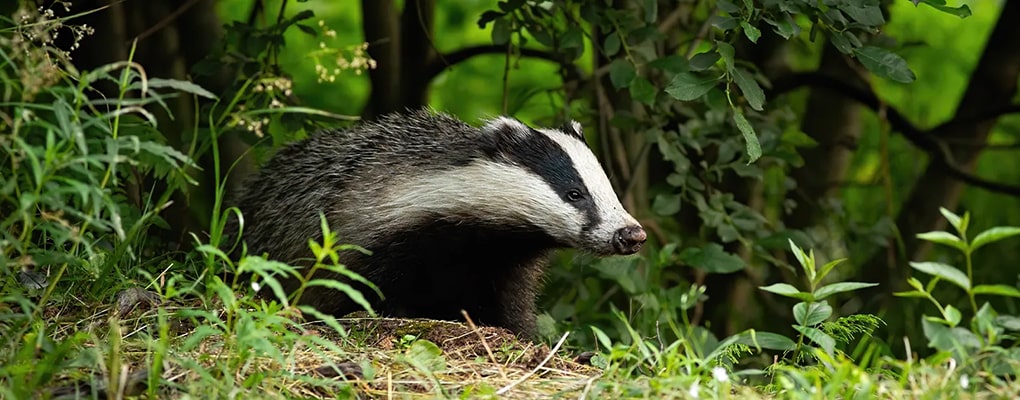
Wildlife such as badgers and bats, while protected by law, can cause significant disruption not only to homes and gardens but also to business premises and commercial development sites. Badgers are known for extensive burrowing which can undermine building foundations, damage landscaped areas, and disrupt fencing or underground utilities. Bats, nesting in roof voids or loft spaces, can also create planning complications and require specialist attention during building, renovation or commercial fit-outs.
JG Pest Control provides a full range of legally compliant services to resolve these challenges effectively and ethically across South Yorkshire. Whether you are dealing with a sett in your garden, a construction project delayed due to environmental conditions, or recurring wildlife interference at your business premises, our team is here to help.
Badger Species and Their Behaviour
European Badger (Meles meles)
The UK's only native badger species, common throughout the country. Badgers are nocturnal mammals that live in underground burrow systems called setts. They are powerful diggers and territorial by nature.
Sett Structures
A badger sett can have multiple entrances, chambers and tunnels, often expanding over time. Setts are used across generations and can extend a considerable distance underground, sometimes close to buildings and boundaries.
Feeding Habits
Badgers forage for earthworms, insects, fruit and small animals, digging into lawns and flower beds in both residential and business properties as they search for food.
Territorial Behaviour
Badgers use scent marking and well-worn paths, often crossing gardens, farms, industrial estates and office grounds. Badgers and their setts are protected by law under the Protection of Badgers Act 1992.
Sett Facts and Behaviour
Badger setts are intricate networks of tunnels, sometimes occupied continuously for over a century. Badgers are highly social, living in family groups (clans) and maintaining multiple setts across their territory.
Because setts are so permanent, any activity around them must be carefully managed within the law. Disturbing or blocking an active sett without a licence is a criminal offence, so professional, licensed management is essential.
Signs of Badger Activity
Large Holes and SettsBig burrow entrances near boundaries, fences or outbuildings, often with piles of freshly excavated earth nearby
Raised or Collapsed SoilDisturbed ground where badgers have dug, including raised mounds or sunken, collapsed areas across lawns
LatrinesShallow communal toilets that may appear near fences or in lawns - a clear indicator of established badger territory
Worn TracksWell-trodden paths across lawns, gardens or commercial plots where badgers travel the same routes nightly
Claw MarksScratch and claw marks on fences, decking and trees where badgers climb, mark territory or push through
Night-Time NoiseSounds heard after dark as badgers become active, including digging, snuffling and movement near the property
How Badger Activity Can Be a Problem
Burrowing can undermine foundations, patios, outbuildings or business infrastructure
Damaged lawns, landscaping or commercial grounds due to foraging and digging
Setts in construction or development zones can halt planning or works
Badgers may dig under fences or sheds, causing instability or safety concerns
Badger Control and Compliance Services
Badger surveys and licensed assessments of activity and sett structure
Mitigation plans, exclusion fencing and one-way gates for sett closure
Licensed badger sett closure and artificial sett construction
Habitat restoration, ongoing monitoring and disease management advice
Badger Management
The JG team will carry out a licensed assessment to determine the presence, activity level and sett structure of any badger population affecting your residential or commercial land. From there, we will recommend the most appropriate approach - whether that is exclusion fencing, habitat repair or legally approved sett closure.
Legal restrictions make DIY exclusion unlawful, so professional management is required. All work is completed in accordance with Natural England licensing, ensuring full compliance and protection of this legally protected species. We cater to homeowners, property developers, businesses and construction firms alike. To arrange a survey, get in touch with our team today.
Contains information related to marketing campaigns of the user. These are shared with Google AdWords / Google Ads when the Google Ads and Google Analytics accounts are linked together.
90 days
__utma
ID used to identify users and sessions
2 years after last activity
__utmt
Used to monitor number of Google Analytics server requests
10 minutes
__utmb
Used to distinguish new sessions and visits. This cookie is set when the GA.js javascript library is loaded and there is no existing __utmb cookie. The cookie is updated every time data is sent to the Google Analytics server.
30 minutes after last activity
__utmc
Used only with old Urchin versions of Google Analytics and not with GA.js. Was used to distinguish between new sessions and visits at the end of a session.
End of session (browser)
__utmz
Contains information about the traffic source or campaign that directed user to the website. The cookie is set when the GA.js javascript is loaded and updated when data is sent to the Google Anaytics server
6 months after last activity
__utmv
Contains custom information set by the web developer via the _setCustomVar method in Google Analytics. This cookie is updated every time new data is sent to the Google Analytics server.
2 years after last activity
__utmx
Used to determine whether a user is included in an A / B or Multivariate test.
18 months
_ga
ID used to identify users
2 years
_gali
Used by Google Analytics to determine which links on a page are being clicked
30 seconds
_ga_
ID used to identify users
2 years
_gid
ID used to identify users for 24 hours after last activity
24 hours
_gat
Used to monitor number of Google Analytics server requests when using Google Tag Manager